


We all are fascinated by the story of Fontanafredda and Casa E. di Mirafiore in Piedmont, linked to the love story between the King of Italy, Vittorio Emanuele II, and Rosa Vercellana. Two historic entities in the Langhe wine area reunited thanks to the intervention of Oscar Farinetti and Luca Baffigo with whom they return in local and wise hands after years of vicissitudes. Founded in 1858, Fontanafredda is especially known for producing Barolo, which was exported for the first time in 1886 by them. In 2008, the entry of the Farinetti family introduced modernization and sustainability to Fontanafredda. Today, Fontanafredda and Casa E. di Mirafiore represent two parallel productions: the first continues to enhance the classic characteristics of the Langhe, while Mirafiore maintains its own distinctive line, not only based on the vineyard but also in terms of teams and cellars (25Ha, organic).
Visiting Fontanafredda is always extremely engaging precisely because of the scent of history that you can breathe together, however, with the continuous “renewals” such as the so-called Villaggio Narrante (Villaggio Narrante at Fontanafredda & Casa di E. Mirafiore): the common thread between the various production and hospitality facilities including the starred restaurant of the led by Alciati family, another territorial reference.
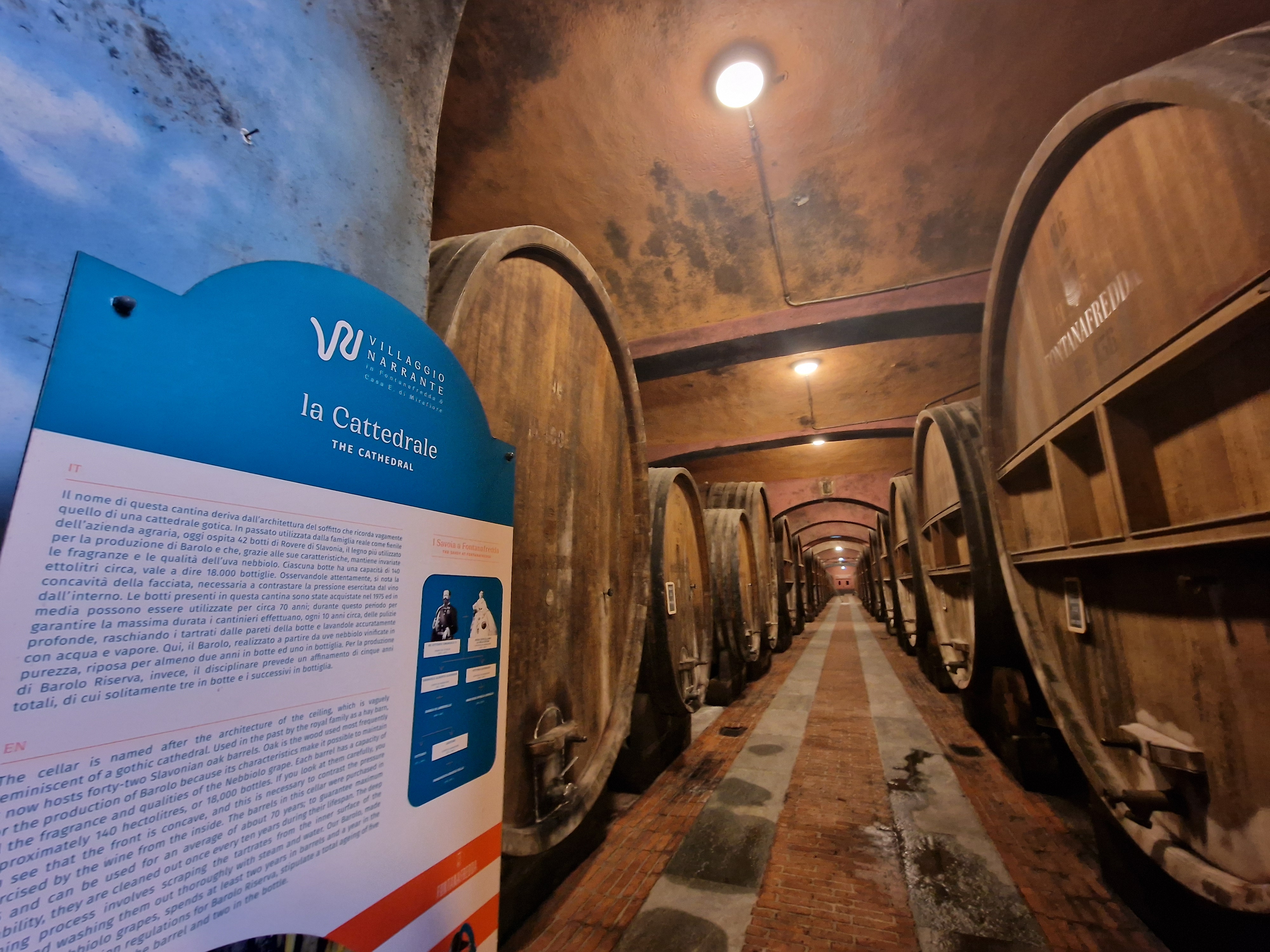
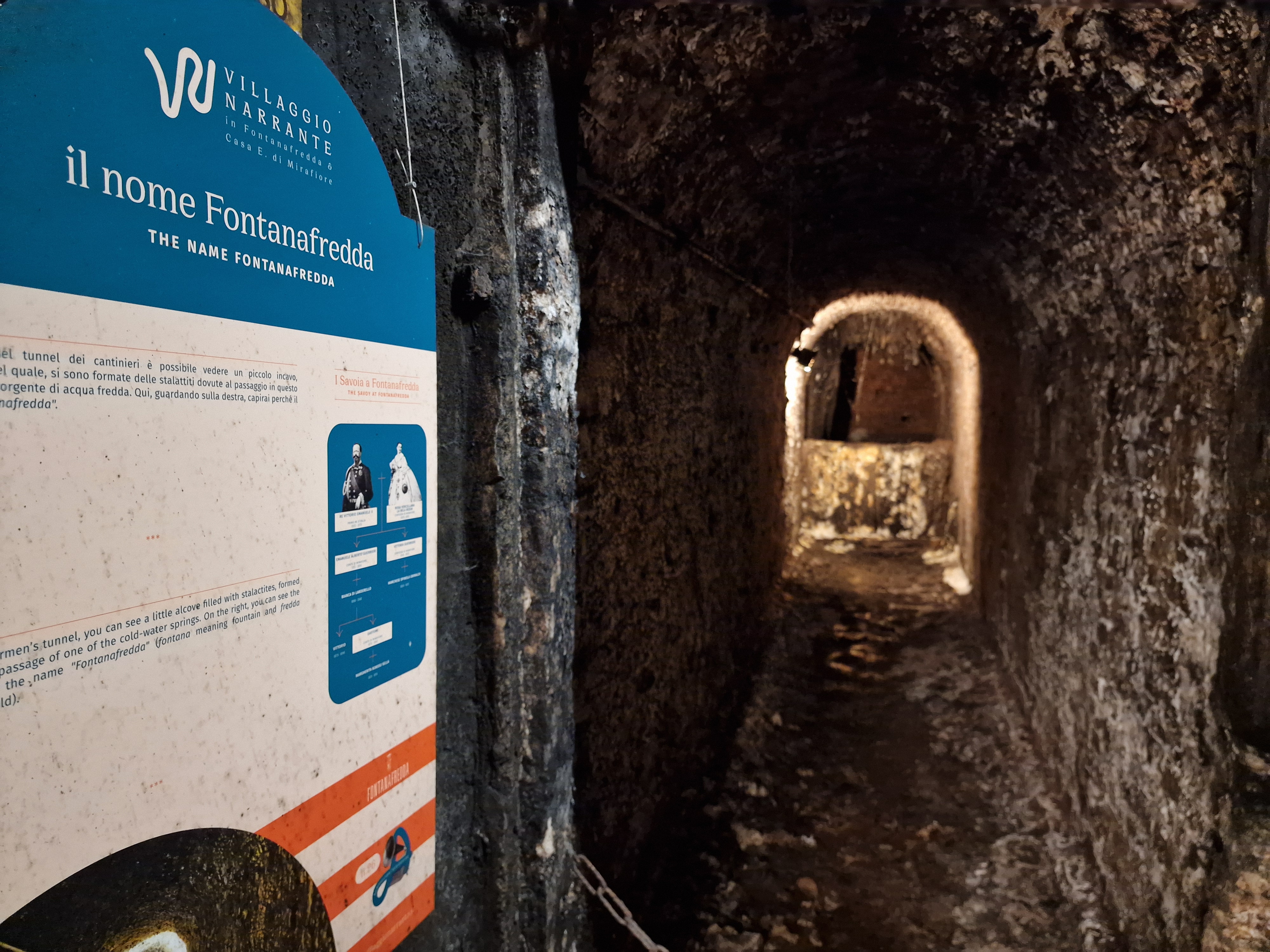
Visiting “The Cathedral” with 42 barrels, discovering the first concrete tanks of Europe, approaching the “source” of cold water that suggested the name itself (Fontanafredda literally stands for “Cold Fountain”) allows for total immersion.
On the occasion of my last visit, I had the chance to concentrate on the tasting of their Barolos with the precious guide of Roberto Bruno, director and VP of Sales and Emilia Badellino of Export dept. who introduced me to their simple yet profound concept: territory first. We can also find the same varieties, (Nebbiolo for what it may concerns Barolo) in other areas and, who knows, today and in the future, even for excellent versions, but it is the terroir that will mark the line, the brand, the stylistic signature of a winery. Here is why, they reiterate their pride in the inclusion of the Langhe as a UNESCO heritage site. The English claim – “Terroir driven” – gives the idea of a clear and precise orientation.
And when we talk about Barolo by Fontanafredda the link with the cru ‘Serralunga d’Alba’ is automatic: today we celebrate 32 years of the first municipal mention of Barolo in the world. They are among the very first to believe in the concept of cru, shifting the focus to the territory even in times when the debate was focused on winemaking, more in general, between “traditionalists” and “modernists” (read more here Barolo Boys, the movie – Chiara Giorleo).
The wines speak for themselves with a Serralunga 2019 also representative of the “Renaissance” project which was born from a post-Covid reflection with a graphic representation on the label (10 values, one per year: “trust” is the one associated to this vintage, 2019). A project in continuity with the company philosophy, having been a pioneer with respect to sustainability and similar practices.
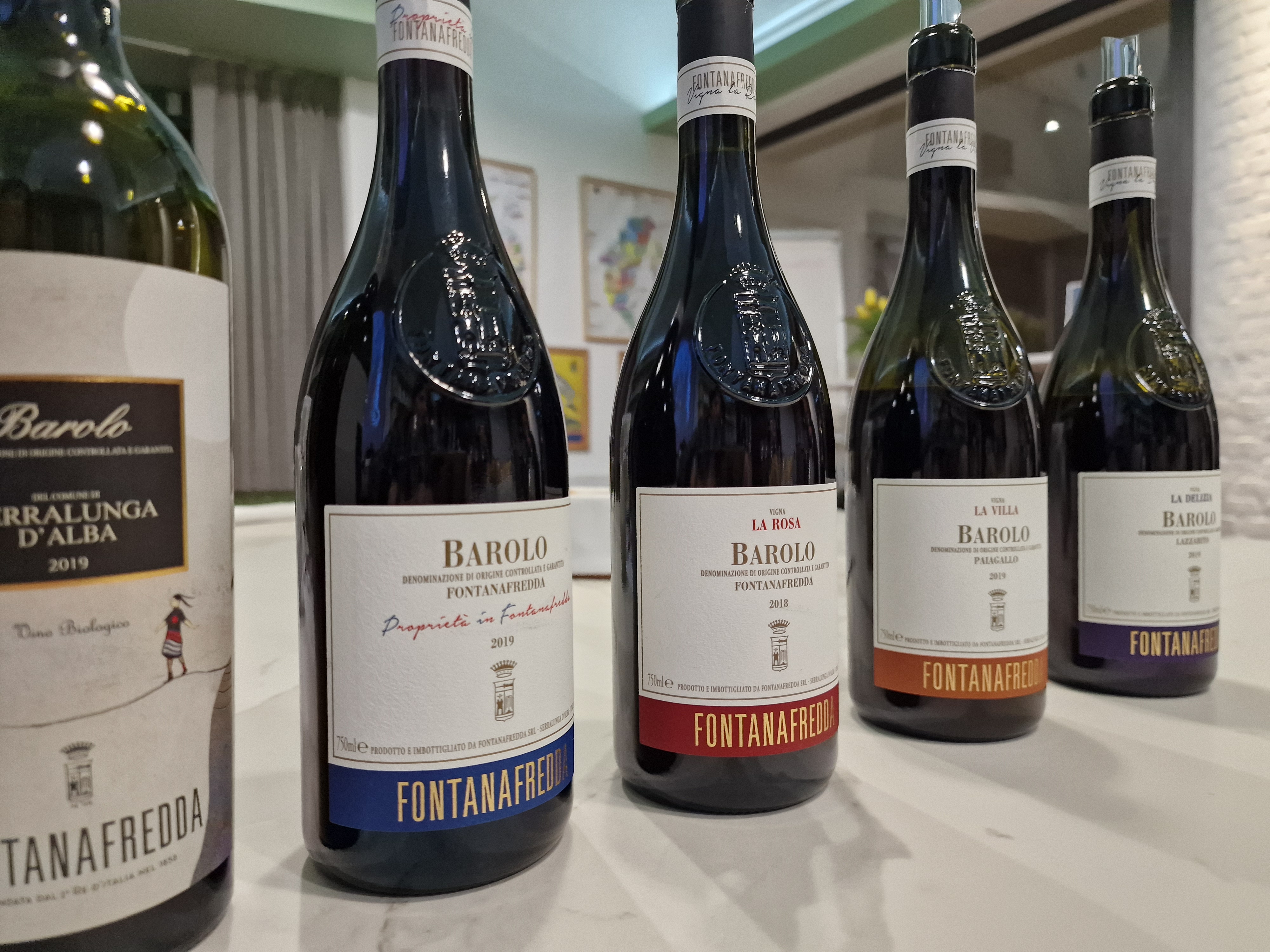
2019: all the character of Serralunga is in this glass, the refreshing minty nose which makes it penetrating but fine, combines with note of forest floor along with green coffee, raspberry, red rose and cocoa powder. Same territorial coherence for the palate: austere and tannic with a tasty finish that recalls flavors of pot-pourrì and cranberry; the aging potential is important and becomes central especially compared to other areas.
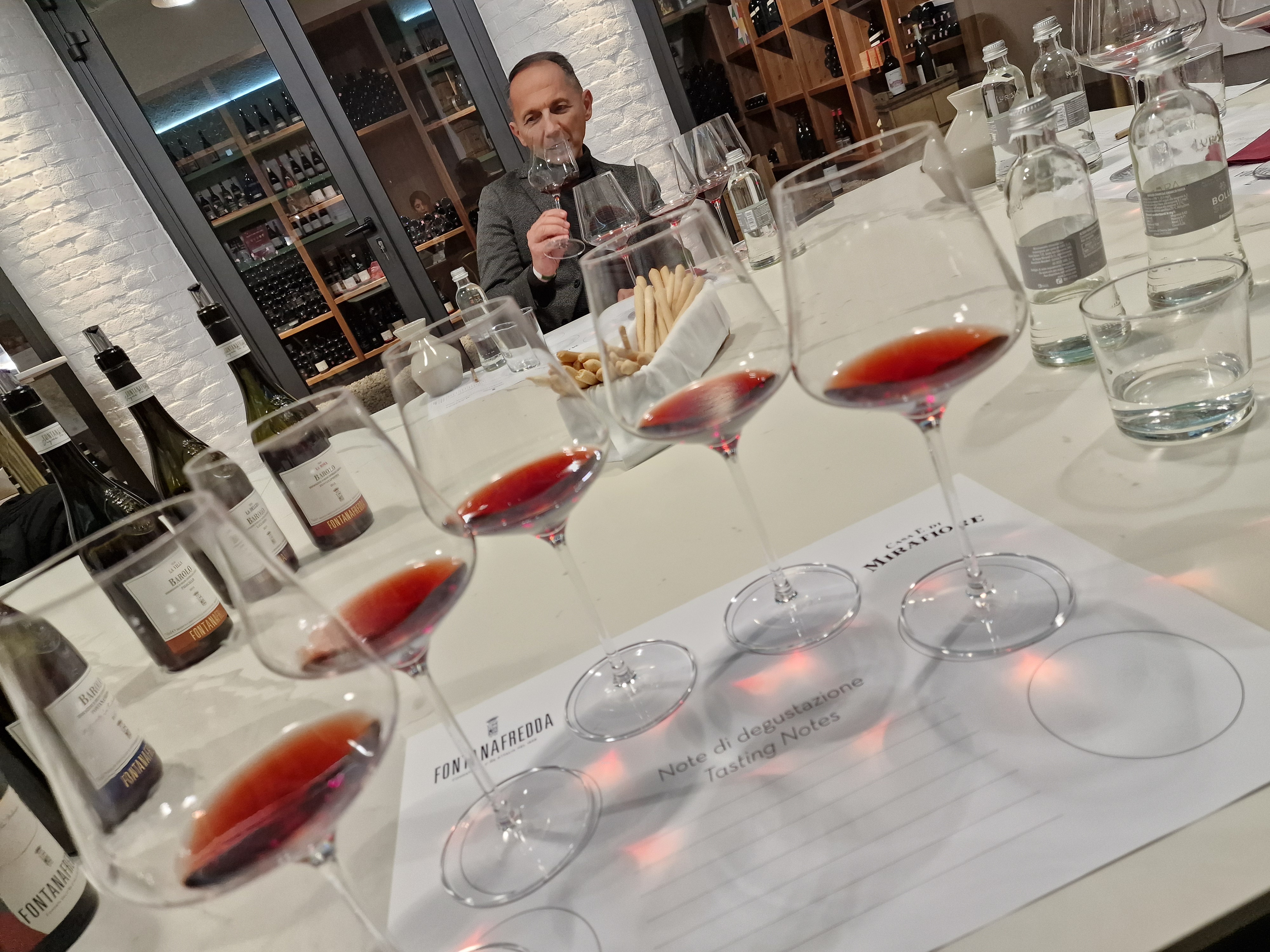
Then we moved to Paiagallo, in whose heart we find the historically important cru: Vigna la Villa (municipality of Barolo) 2019. Shiner nose with aromas of smoked leaves, dark berries and meaty notes for a firm but juicier palate on the finish, the tannin is more integrated although the finish is shorter.
Then we tasted the Barolo form the MGA Lazzarito, one of the most historic vineyards of Fontanafredda: Vigna La Delizia. The 2019 offers rocky notes and more exuberant fruit such as ripe cherry before aromas of violet to announce a subtle but easier profile, with a bitter but still interesting finish.
And then “Proprietà in Fontanafredda” 2019, in the initial part of the municipality of Serralunga d’Alba: the sandy soils translate into finesse represented by the bright color and the floral component of the bouquet: violet, rose, even jasmine and then fleshy fruit. The stronger acidity completes the picture of a balanced, smooth tasting, with a fruity finish.
Finally, in the heart of the MGA Fontanafredda, the one that is the most historic and representative for this company: Vigna La Rosa with the typical blue marl of Serralunga. We tasted the 2018 (we are forced to interrupt the flow because the 2019 was not produced due to a hailstorm): open profile with notes of rose rather than violet, red cherry and walnut. On the palate it is round and compact with a great potential for ageing.
In a few words, one can easily get their experience in carefully handling the different plots.
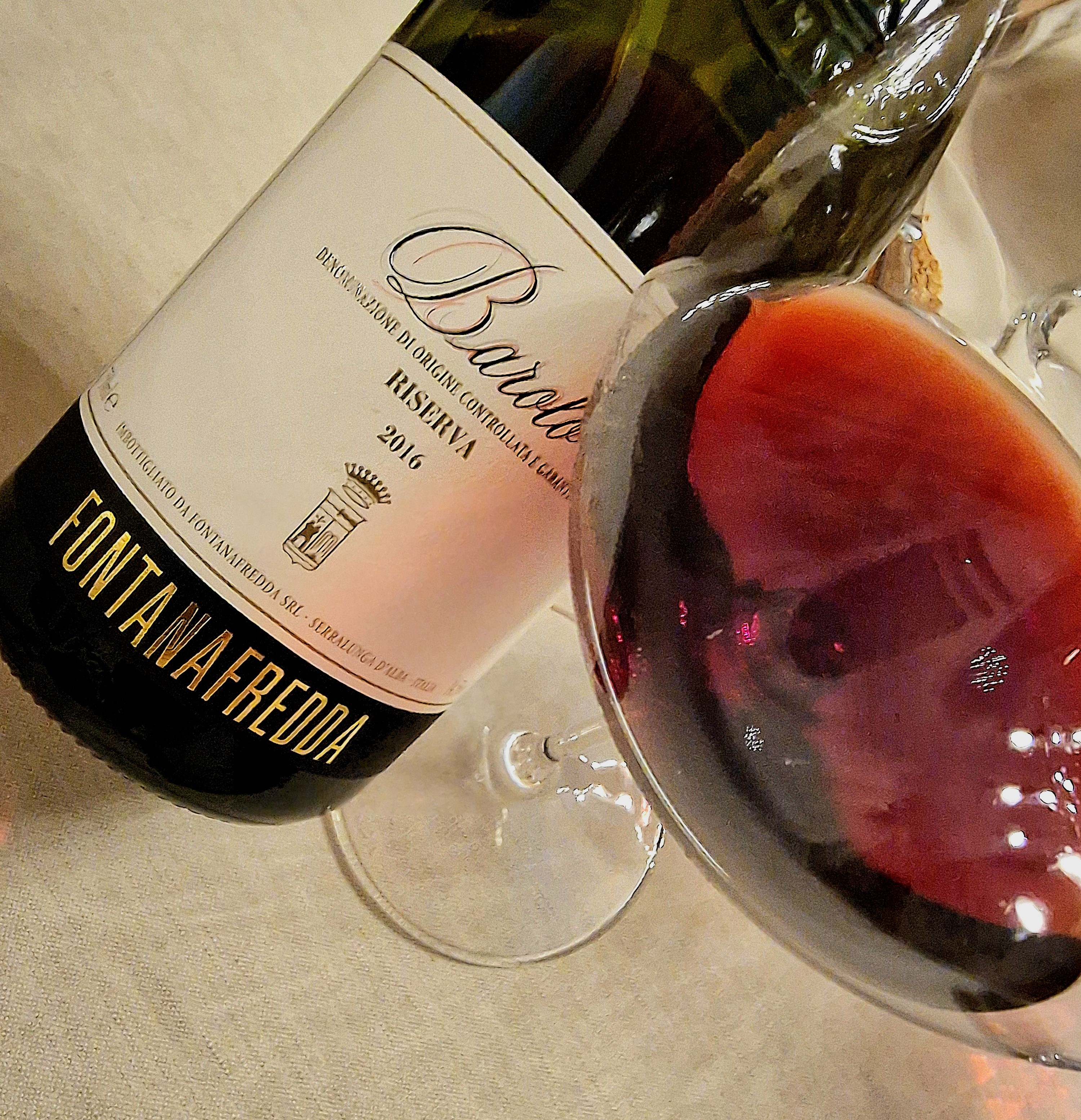
Finally, during a wonderful dinner at Guido restaurant, I had a splendid 2016 Riserva, aged in large oak barrels for 62 months: a deep and layered Barolo, of elegant grandeur, sumptuous and very long.