


Viña Tondonia is history, because since 1877 it has crossed the Rioja without ever denying its identity.
Viña Tondonia is prestige, built over time rather than on the urgency of approval.
Bodega López de Heredia Viña Tondonia (R. López de Heredia Viña Tondonia, S.A.) is a benchmark for those who seek depth in wine rather than shortcuts—one of the great guardians of an idea of wine that has never felt the need to be updated.
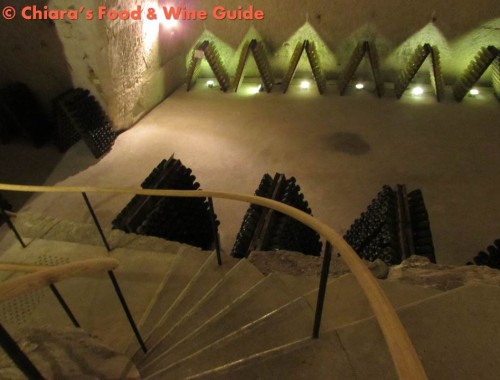
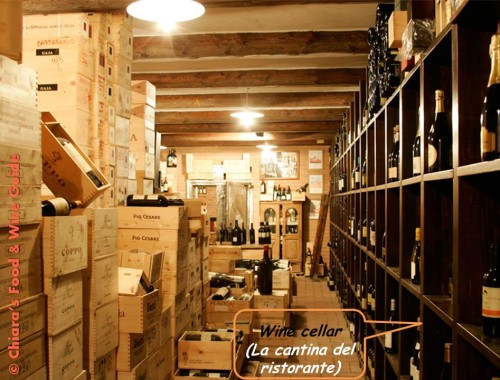
Founded by Rafael López de Heredia y Landeta at the end of the 19th century, the winery was established in Haro, in the heart of Rioja Alta—the most renowned of the three subregions of La Rioja—at a pivotal moment for European viticulture. Here, tradition has never become rhetoric; it has remained method, discipline, and vision. “By ‘tradition’ we do not mean immobility or opposition to change, but rather a dynamic and aesthetic concept grounded in the preservation of timeless principles and criteria,” they state.
López de Heredia is likely the oldest winery in Haro and one of the first three in Rioja. It was among the very first estates in the region to vinify single vineyards, anticipating by decades the modern concept of parcel identity. It is also one of the few family-run wineries regulated by the Denominación de Origen Calificada Rioja (DOCa). A series of milestones that underscore the value of wines that go far beyond the tasting itself.
To this day, the winery remains entirely family-owned, and for López de Heredia, quality can only come from estate vineyards, carefully tended over time. On this foundation, Don Rafael López de Heredia y Landeta established Viña Tondonia between 1913 and 1914—the estate’s symbolic vineyard—located along the Ebro River in Rioja Alta, on alluvial soils rich in limestone. Grapes from these historic vineyards are reserved exclusively for the flagship wines and, in the finest vintages, give rise to the celebrated Gran Reservas. Beyond Tondonia, López de Heredia owns three additional vineyards in Rioja Alta: Viña Cubillo, Viña Bosconia, and Viña Zaconia.
Traditional regional varieties—above all Tempranillo and Garnacha—are interpreted according to an unchanged philosophy: spontaneous fermentations, extended aging, barrels crafted in-house, manual rackings, and waiting periods that defy market pressures. López de Heredia is especially renowned for its long-lived reds and whites—wines that have defined the classical canon of Rioja.
Where there is knowledge and coherence, one is always in safe hands.
It is within this cultural framework that the rosé is born—equally sought-after, and free from the constraints into which many wines in the category have forced themselves by chasing external models and fleeting market trends.
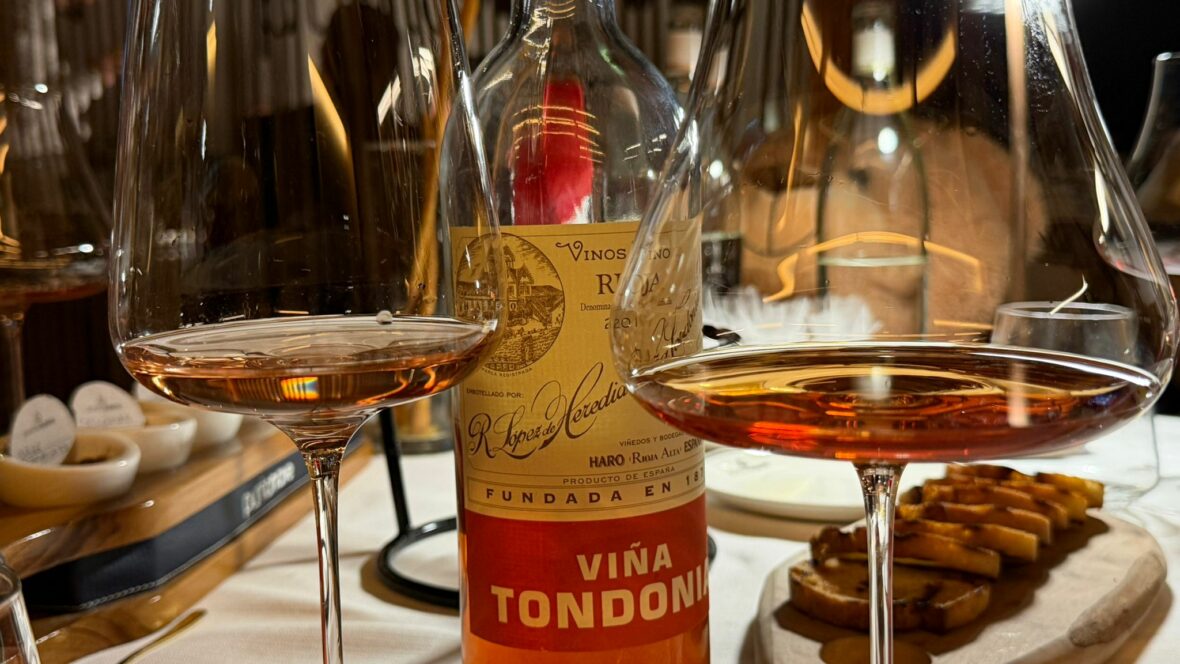
Viña Tondonia Rosado 2011 is a wine that rejects every contemporary category. It is crafted from Garnacha (60%), Tempranillo (30%), and Viura (10%), all sourced exclusively from estate vineyards, and follows the same rigorous path reserved for the house’s great wines. After fermentation, it undergoes four years of aging in oak barrels, during which it is manually racked twice a year and fined before an additional long rest in bottle.
The result is a rosé that escapes every classic parameter: beyond scale in price—over €200; beyond segment in character; beyond time in its capacity to evolve. It does not seek immediacy or aromatic seduction, but rather depth.
In the glass, the color is suspended—coppery, ancient, compact, and luminous. The aromatic profile unfolds in layered notes of burnt orange, dried aromatic herbs, slate, then rust, toasted paprika, damp tobacco leaves, and finally licorice with whispers of camphor. A prolonged, dynamically evolving aromatic analysis further reveals the vibrant character of the palate, where citrus tones—reminiscent of chinotto—combine with hints of dried fruit to extend a lively, savory, and deeply satisfying sip with a silky texture, imbued with noble oxidative nuances. A saline touch enlivens the wine, balancing a structure reminiscent of a great aged white, yet distinct for its sharpness and earthiness, lingering on penetrating, spicy rather than sweet evolutionary notes.
This is not a wine for consumption, but for understanding. A wine that does not ask to be immediately liked, but to be followed. A sip that goes beyond tasting—and leaves a lasting impression.
A wine worthy of an equally fitting pairing, as experienced at Punto Nave in Naples, a restaurant renowned for the quality of its cuisine and service. Here, seafood is expressed in countless nuances and elevated with confident precision; the warm, gracious hospitality is no less remarkable.