

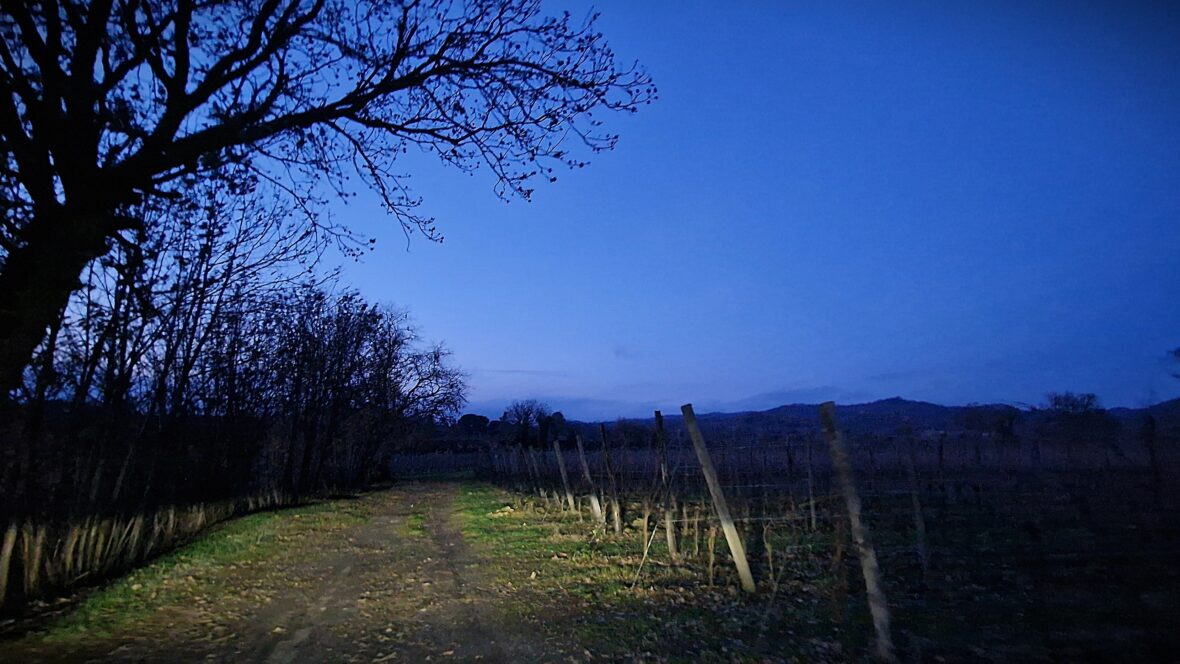

An evening visit inevitably adds charm to the experience. Walking through the vineyards at sunset, with artificial lights switched on only when necessary, has something particularly evocative about it. When this is combined with the family passion that drives the project, the picture is complete.
The story of the winery also carries an element of chance—or rather, of challenge. Antonio Pagano decided to invest the proceeds of a financial operation to enhance his father Angelo’s vineyards. Today, the baton has passed to the next generation: his son Angelo, in turn, has chosen to dedicate himself entirely to wine, without distractions.
The estate covers 26 hectares of vineyards, producing around 180,000 bottles across three plots in the Caserta area of Falernum—arguably the first appellation in history, if we understand the term as the bond between wine and territory, a concept already clear in Roman times.
The name Fattoria Pagano reflects the origins of the estate, which began as a broader agricultural venture that also included fruit trees. The vineyards lie below 300 meters above sea level, with vines trained at a certain height to avoid sudden frost and limit heat absorption from the soil—an increasingly important factor in the context of climate change.
The winery, completely renovated in 2015, also includes a kitchen and hospitality spaces. Since this year, it has also been possible to produce sparkling wines, such as Trebus, made from Campania’s most renowned white varieties: Falanghina, Greco and Fiano.
During a recent visit, I had the opportunity to taste the entire range, accompanied by memorable local dishes: meatballs, parmigiana, and regional cheeses. Nothing more needs to be said.
fattoria pagano
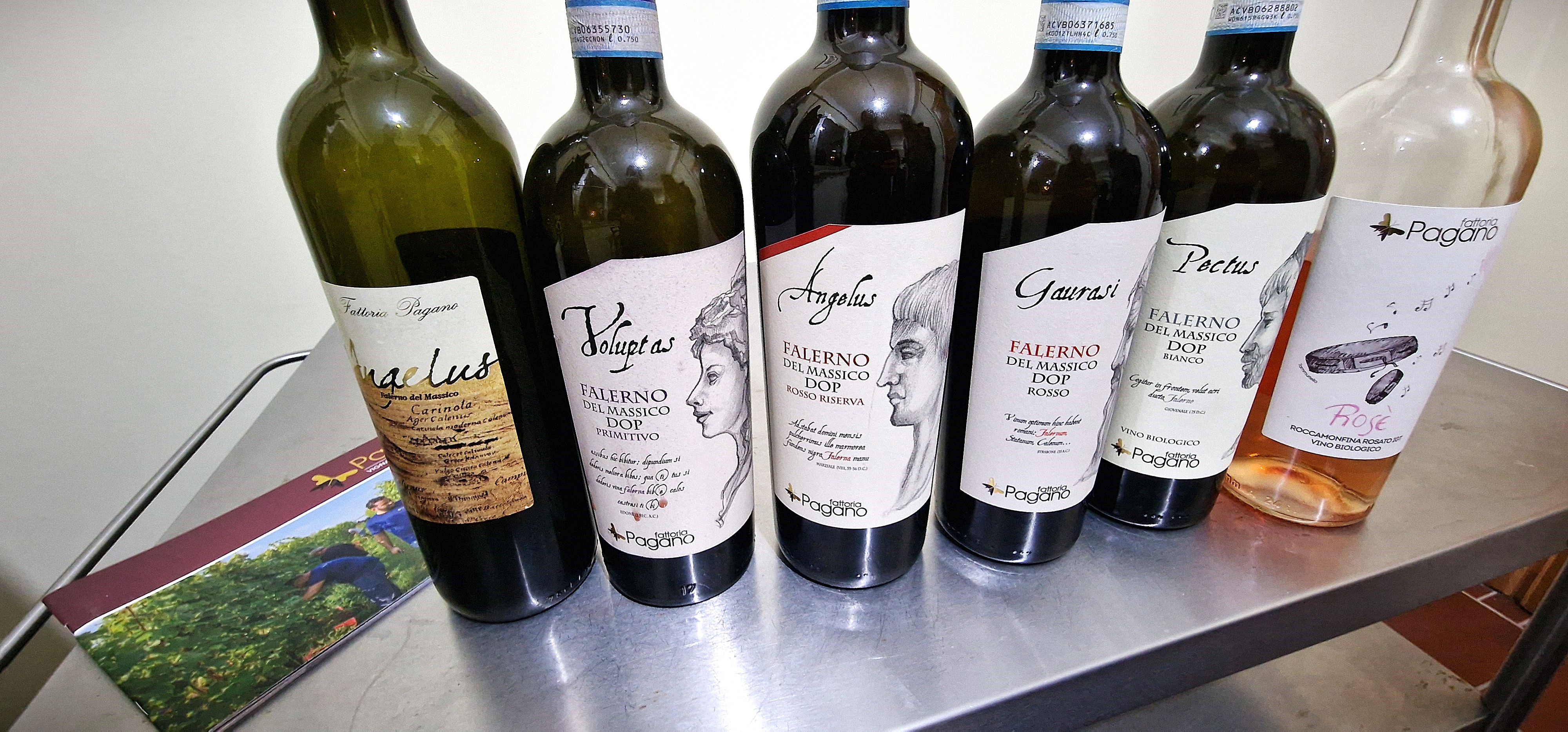
Among the wines, a few notes: the Rosè—with the accent reversed as a tribute to the mother, Rosetta—is made from Aglianico, Piedirosso and Merlot. It is a generous rosé, balanced by the freshness of Aglianico.
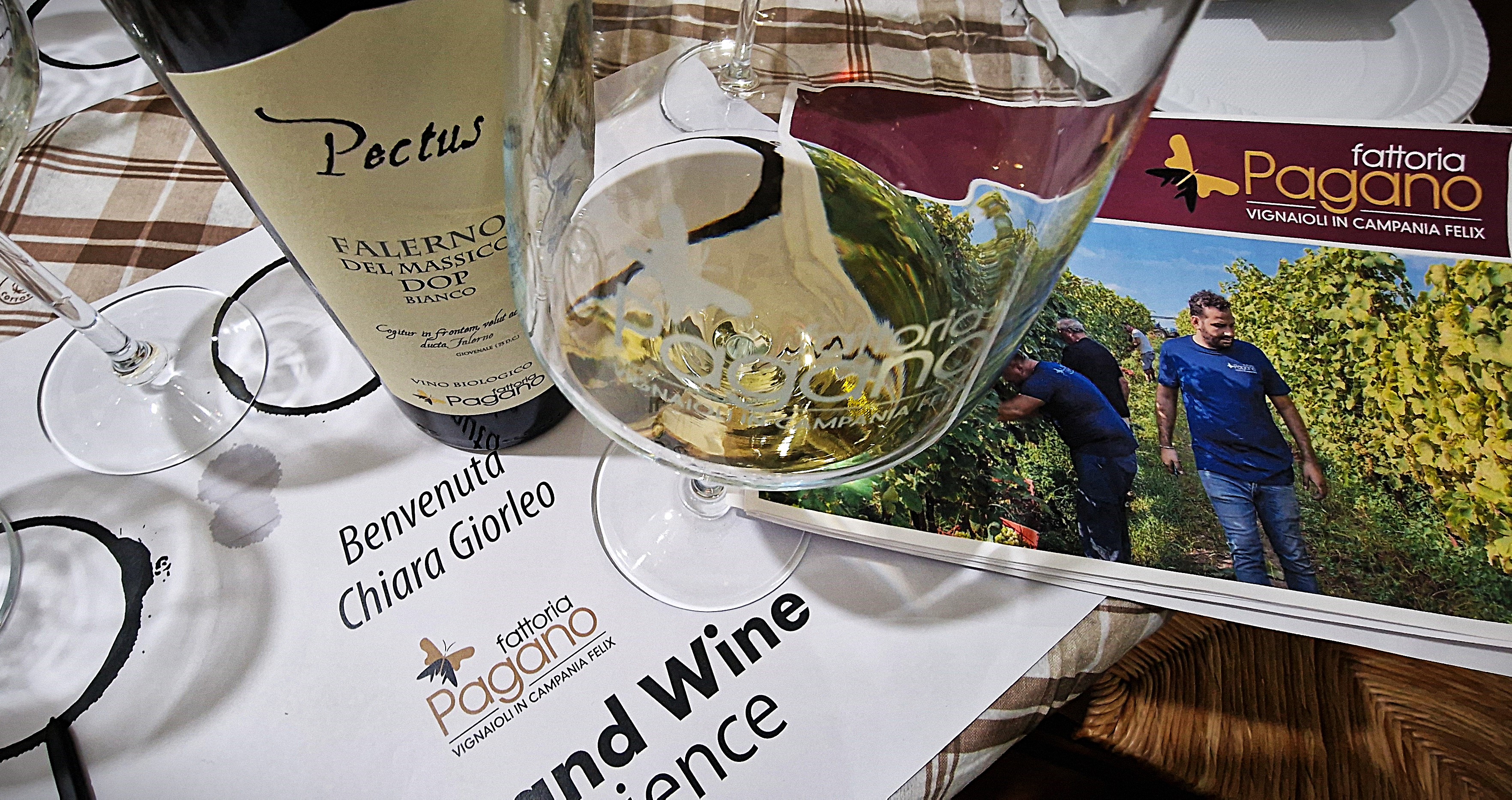
My favorite, however, remains Pectus, a Falerno del Massico Bianco made from 100% Falanghina, 75% aged in tonneaux. The aromatic profile recalls lemon custard, while the palate is textured, coherent and dynamic.
Gaurasi—named after the Aurasi area—is a Falerno del Massico Rosso 2023 made from Aglianico and Piedirosso. The fruit is pure, accompanied by notes of pepper, resulting in a dry yet balanced sip, also shaped by a slight on-vine drying of the Aglianico.
Voluptas 2023, on the other hand, expresses an intense dark fruit character with hints of the chewy liquorice typical of Primitivo, paired with a surprisingly smooth drinkability.
The real surprise comes with Angelus, dedicated to the grandfather. It is the reserve version of Gaurasi—a Falerno rosso selected in the vineyard and aged for 18–24 months in barrique, without on-vine drying.
fattoria pagano – wines
During the tasting, we compared the 2019 and 2006 vintages—a small but meaningful gift for those who enjoy observing time in the glass.
The 2019 is deep, spicy, rounded by fruit maturity, and more austere than Gaurasi.
The 2006, on the other hand, opens with aromas of chestnut, potpourri and coffee liqueur, showing remarkable vitality on the palate.
A finale that perfectly reflects the soul of Fattoria Pagano: respect for tradition, a strong family vision, and an ever-deepening awareness of its territory.