

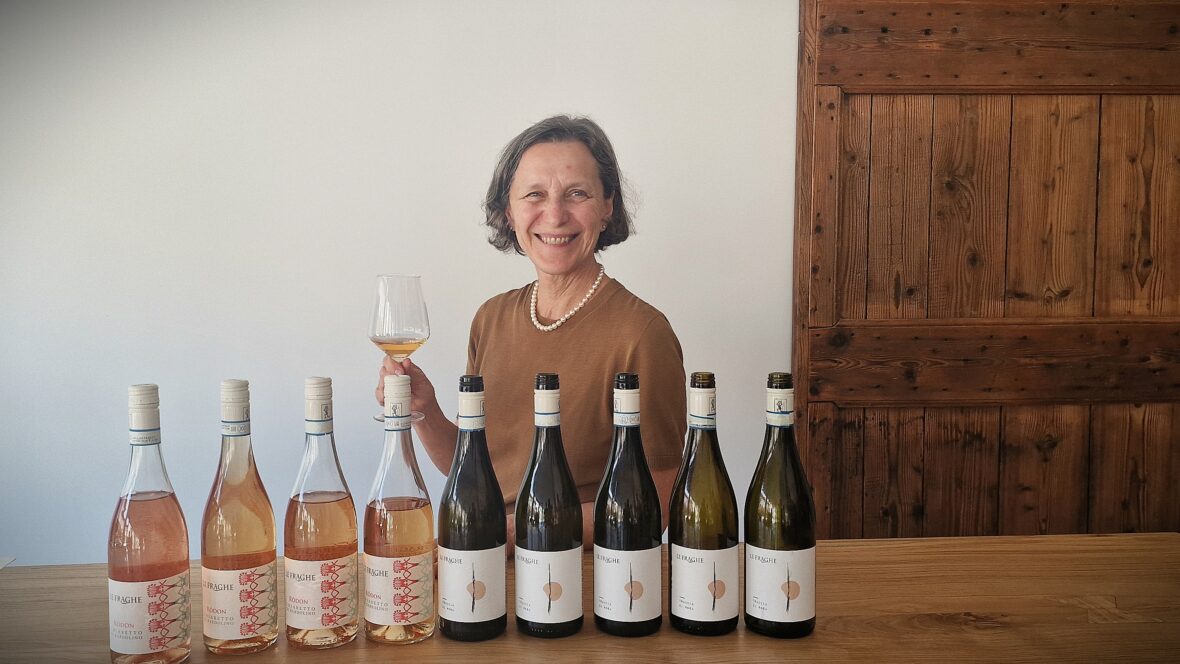

Matilde Poggi is a central figure in the production of rosé wines in Italy. She believes in rosé as a true third category of wine like – perhaps – only France genuinely embraces nowadays. It’s no coincidence that she offers two rosé labels, both refined over time. The screw cap has long been her ally, and time in the bottle only enhances the wine’s complexity.
For the second year, she is hosting a coveted and special event in the cellar: a vertical tasting of her two rosés, Rodon and the more recent Traccia di Rosa — an exploration of the evolution of two distinct, elegant, and at the same time surprising wines.
Unsurprisingly, Le Fraghe consistently ranks highly in the 100 Best Rosé guide published by Luciano Pignataro, which I co-edit with colleagues Amodio, Granieri, and Mosca.
This event, designed to explore the wines’ aging potential, offers a valuable snapshot not only of the estate but of the rosé category in general — a category still weighed down by various prejudices.
The region itself — Bardolino, on the Venetian shore of Lake Garda — has always played a key role in Italian rosé production, especially through its Chiaretto wines. It’s no surprise that powerful messages like this one originate here.
We are in a landscape framed by Lake Garda, the mountains of Valpolicella, and the glacially carved Val d’Adige (Northern Italy) — a rather windy area, which favors the health of the grapes. The soil is stony, mineral-rich, and dry enough that the estate had to build a well. This brings both benefits (good drainage and easy vineyard access) and challenges, especially in managing drought.
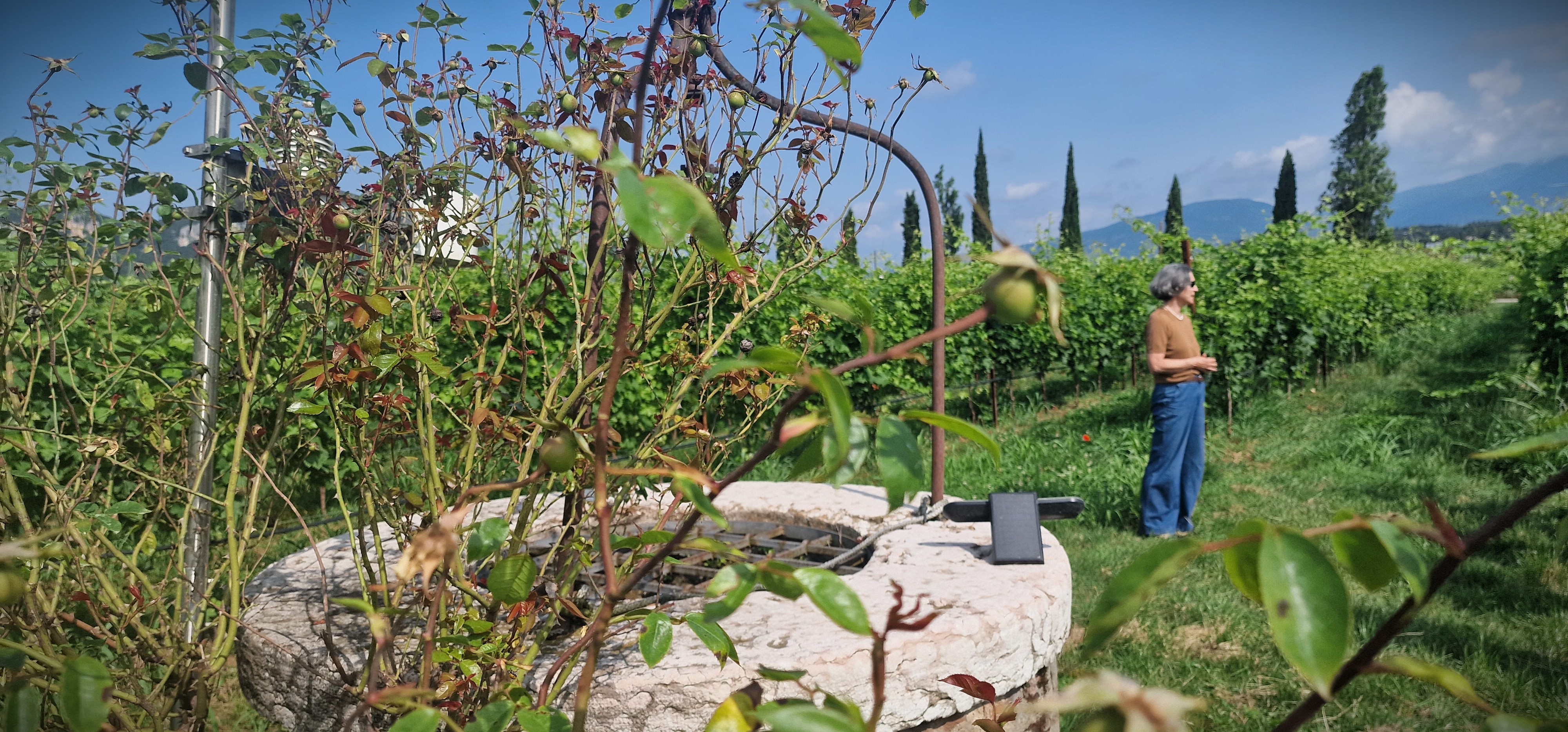
le fraghe – matilde poggi
She places great trust in Corvina, which makes up the majority of her production, including for the reds, and pairs it with Rondinella as required by the appellation rules. If she could, she would try to make rosé exclusively from Corvina, which also provides greater color stability.
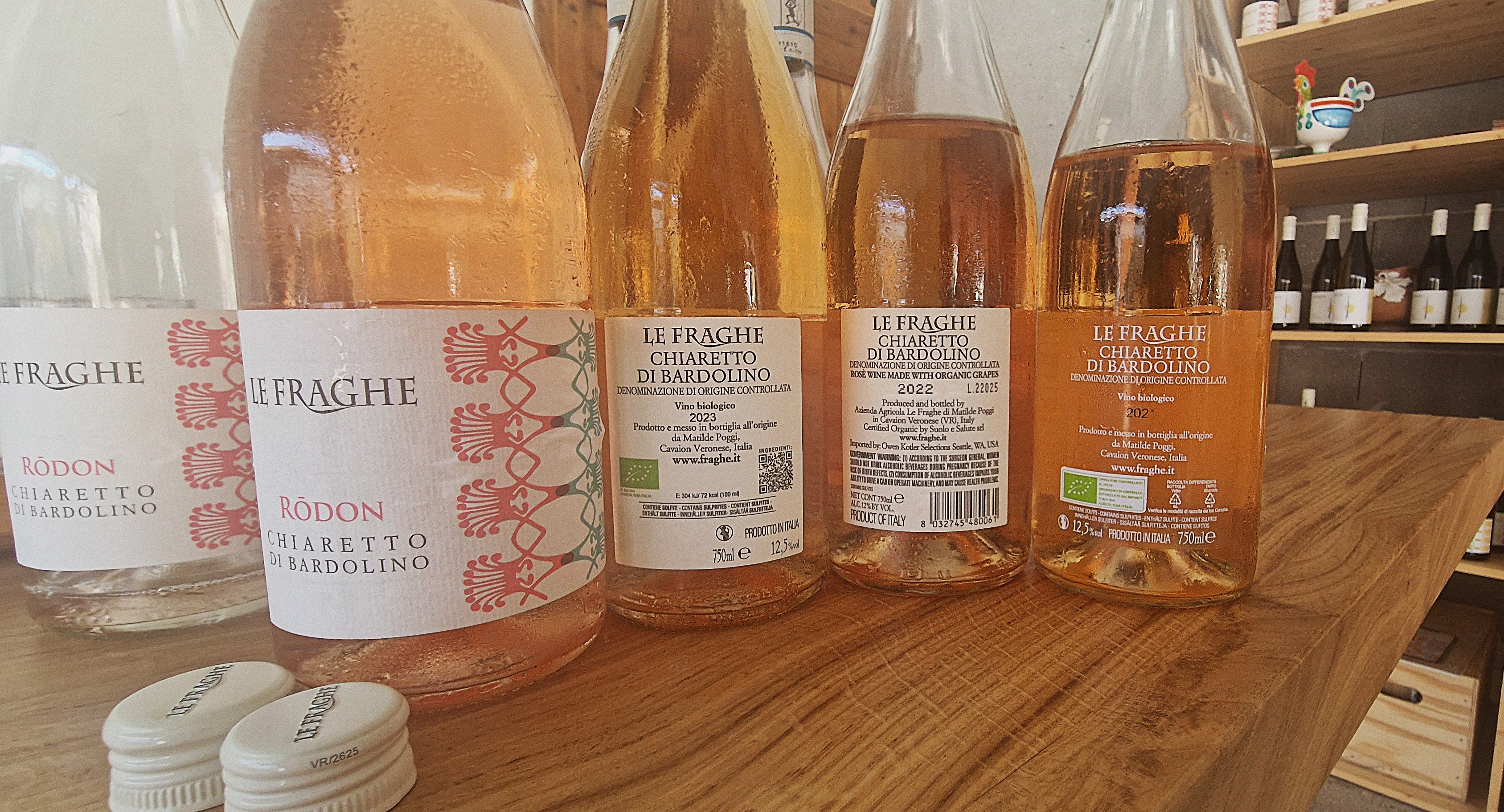
le fraghe – rodon
MATILDE POGGI: VERTICAL TASTING OF THE 2 Rosé
Rodon, made from 80% Corvina and 20% Rondinella, comes from 23-year-old vines. Part of the must undergoes a short maceration, followed by spontaneous fermentation. There is no malolactic fermentation, and the wine is aged only in stainless steel.
The 2024 is slightly leaner than the 2023, reflecting the vintage. After a year in the bottle, it shows beautifully — no more youthful exuberance, yet no signs of early aging either. It lacks the almond note found in the intriguing 2021 and 2022, but still carries the hallmark savory finish.
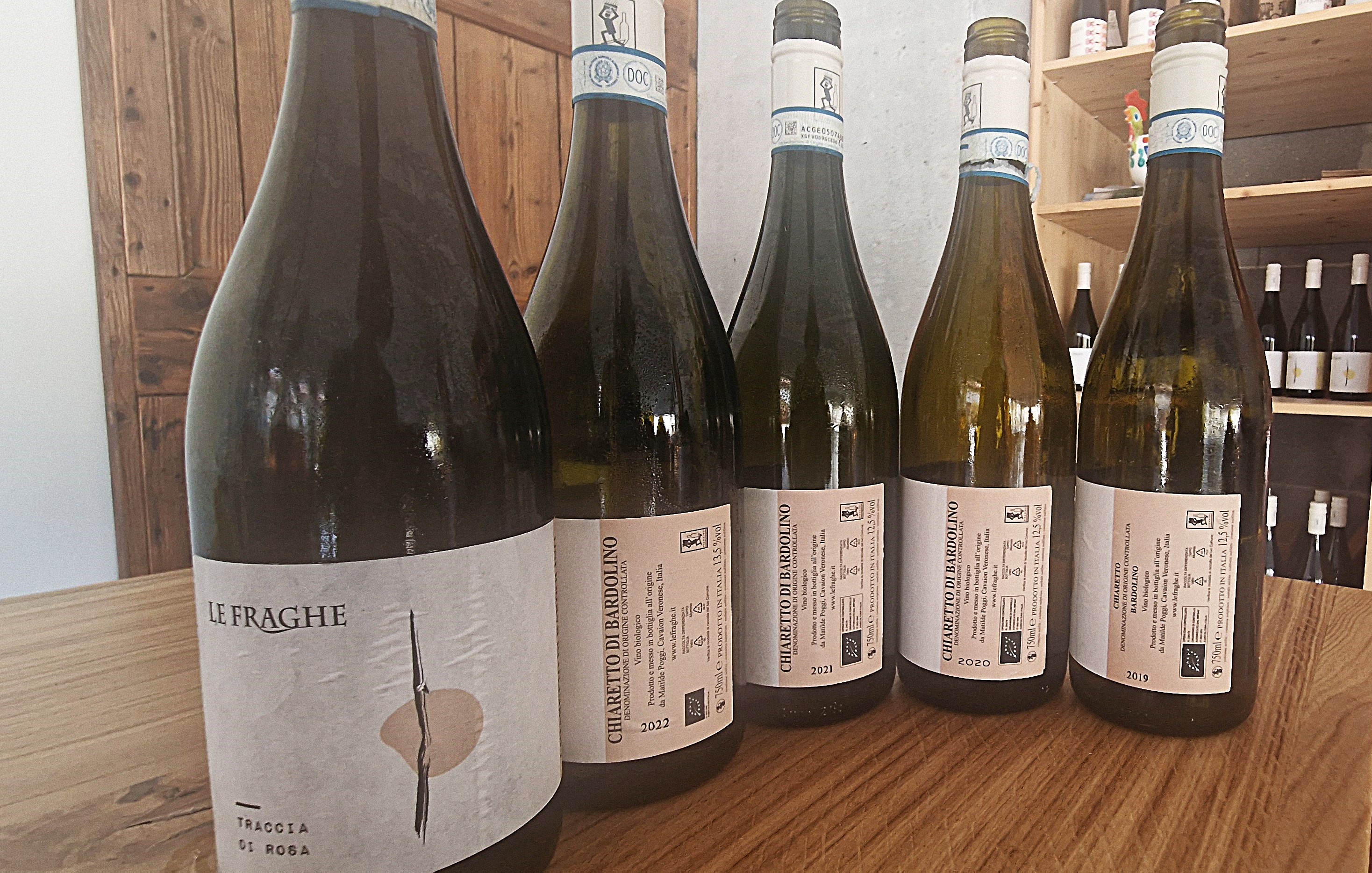
le fraghe – traccia di rosa
Traccia di Rosa debuted in 2019. It is 90% Corvina and 10% Rondinella, from 10-year-old vines, a selection of the best grapes from the Ronchilonghi vineyard in Affi. It undergoes 24 hours of maceration in cement, spontaneous fermentation, and 12 months of aging in cement. As a result, the earliest vintage currently available is 2023.
What stands out in Traccia is its velvety texture and enveloping mouthfeel. The 2023 offers a mature and alluring nose, balanced by a vibrant, cleansing palate. With the 2022 vintage, greater integration emerges: notes of iodine, honey, Mediterranean herbs, and face powder lead to a long, tangy finish. The 2021 is more shaded and introspective, still vibrant. The 2020 is fascinating, with amber hues, flavors of syrupy peaches and candied rose — coherent, harmonious, and saline on the finish. The 2019 is deceptive — it almost resembles a white wine (due to lees management, which was later adjusted after this debut vintage) — yet it is the most evolved, with aromas of dried fruit and roasted notes.